
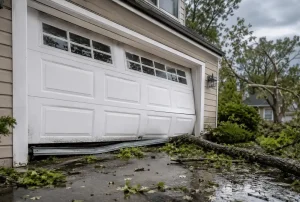
After a heavy storm rolls through South Florida, most homeowners rush to check the roof, the windows, and the backyard. The garage? It usually comes last. But if floodwater reached your garage — even just a few inches — your garage door tracks may already be in worse shape than they look.
Flooding is one of the most underrated causes of garage door track damage. Water doesn’t need to stay long to cause real problems. In Boca Raton, where heavy summer rains and seasonal flooding are part of life, knowing what to check — and when to act — can save you from a stuck door or a full-blown safety failure down the road.
Key Takeaways
- Even shallow flooding can warp, rust, and misalign garage door tracks within hours.
- Debris carried by floodwater is a leading cause of dents and bends in the lower track section.
- A garage door that looks fine after flooding may have hidden track damage that worsens with each use.
- Never force a door open or closed if the tracks feel stiff or uneven — you risk snapping the cables or cracking the panels.
- Most post-flood track issues in Boca Raton require professional realignment or replacement, not DIY fixes.
What Does Flood Water Actually Do to Garage Door Tracks?
Floodwater does more than just wet the metal — it physically reshapes it.
Garage door tracks are typically made from galvanized steel, which is strong under normal conditions. But when standing water surrounds the lower track section for even a few hours, several things happen at once. The metal begins to oxidize, the fasteners that hold the track brackets to the wall absorb moisture, and any debris carried by the water gets packed into the gap between the track and the rollers.
The result is a track that looks intact but no longer runs true. The door may open partway, then grind. Or it may refuse to close flush at the bottom. These are not minor issues — a misaligned track puts uneven stress on every other part of the system.
What Are the Most Common Types of Flood Damage to Garage Door Tracks?
The damage tends to follow a predictable pattern depending on how deep and how long the water sat.
1. Track Corrosion and Surface Rust
The most immediate effect of flooding is surface rust on the track channel. Even galvanized tracks develop oxidation when water sits in the lower curve of the track — the J-bend section closest to the floor. This rust creates friction points that slow the rollers and, over time, grind the roller wheels down unevenly.
In South Florida’s humid climate, this process accelerates quickly. A track that got wet in a Monday storm can show visible rust by Wednesday if it wasn’t dried and treated.
2. Bent or Warped Track Sections
Debris is the biggest threat here. When water flows into a garage, it carries whatever was in the driveway — gravel, branches, landscaping mulch, even small tools. That material impacts the lower track section and can bend the vertical track channel enough to block roller movement.
A track only needs to be misaligned by a few millimeters to cause the door to bind. What looks like a minor dent from the outside may be completely blocking smooth roller travel on the inside of the channel.
3. Loosened or Pulled Track Brackets
Track brackets are anchored to the wall framing with lag bolts. When water saturates the wood framing behind the drywall, those bolts lose their bite. The bracket may not fall off immediately, but it shifts — and a shifted bracket throws the entire track out of plumb.
A track that’s even slightly out of plumb will cause the door to travel crooked, which puts abnormal pressure on the bottom corners of the panels and strains the lift cables.
4. Damaged Bottom Brackets and Roller Stems
The bottom bracket sits at floor level and is almost always submerged during a flood. This bracket connects the bottom of
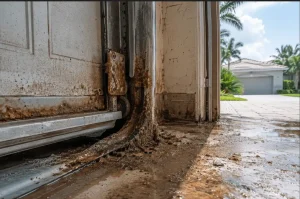
The door panel to the lift cable. After flooding, the stem that holds the bottom roller often rusts solid inside its housing, which means the roller can no longer pivot as the door moves through the curved track section.
This is one of the most common causes of a garage door that opens jerkily or comes off track in the weeks following a flood event — even when the door seemed fine right after.
How Can You Tell If Your Tracks Are Damaged After Flooding?
A careful visual and operational check right after the water recedes can catch problems early.
Start by looking at the lower 18 inches of each vertical track. This is the section most exposed to standing water. Look for visible rust streaks, dents along the channel face, or any section of the track that appears bowed outward or twisted at the mounting bracket.
Next, operate the door slowly using the manual release cord (disconnect the opener first). Pull the door up by hand and listen. A healthy door glides quietly. Grinding, scraping, or a “catch-and-release” sensation are signs that the rollers are hitting a damaged section of the track.
Also, check the gap between the door panels and the track face on both sides. The gap should be consistent — roughly the width of a finger — all the way up. If it narrows or disappears at any point, the track has moved.
What Should You Do Immediately After Flooding?
Act within the first 24–48 hours to prevent rust from setting in and damage from spreading.
Step 1 — Keep the door in place. Don’t repeatedly open and close a flood-exposed door to “test” it. Each cycle drags the rollers through any debris lodged in the track and deepens any damage.
Step 2 — Dry the track thoroughly. Use shop towels or compressed air to dry the interior of the track channel. Pay extra attention to the J-bend at the floor. Standing moisture in that curve is where rust starts first.
Step 3 — Apply a penetrating lubricant. A silicone-based or lithium-based garage door lubricant sprayed into the track channel and onto the roller stems can slow oxidation while you wait for an inspection. Do not use WD-40 — it attracts dirt and breaks down quickly in humid conditions.
Step 4 — Check the brackets and tighten loose hardware. Wear gloves and inspect each wall bracket with your hands. A bracket that rocks or wobbles needs to be rebolted before the door is operated again. If the wood behind the bracket is soft or swollen, the anchor point needs professional repair before relying on it.
Step 5 — Call a professional for a post-flood inspection. Even if the door seems to work, a trained technician can identify hairline bends in the track, compromised roller stems, and framing damage that aren’t visible to the eye. Catching these early is far less expensive than replacing a full track assembly or repairing panel damage caused by a door coming off track.
When Is Track Replacement the Right Call?
Not every flood-damaged track can be straightened back into a safe working condition.
A track should be replaced rather than repaired when the channel has a visible bend deeper than 5–6mm, when the mounting holes are elongated from a shifted bracket, or when rust penetration has compromised the metal’s structural thickness. Grinding a bent track back into shape may restore its appearance, but it creates a stress point that fails under load.
In Boca Raton’s storm season, this situation comes up more often than most homeowners expect. A garage door that survives one flood with a bent track and no repair will often come off track entirely during the next weather event — usually at the worst possible moment.
Replacement track sets are straightforward to source, and a professional installation takes two to three hours. Compared to the cost of panel replacement or cable repair from a door that derailed, it’s a simple decision.
Can Flooding Void a Garage Door Warranty?
It depends on the warranty terms, but flood damage is commonly treated as an excluded event.
Most residential garage door manufacturer warranties cover defects in materials and workmanship — not environmental damage. However, if a homeowner’s insurance policy includes garage structure coverage, flood-related track and hardware damage may be claimable. Document everything before cleaning up: photograph standing water lines on the track, rust development, and any bent sections before repairs begin.
Flooding and garage door tracks are a bad combination — but the damage is manageable if you catch it fast.
South Florida storms don’t give much warning, and the garage is almost always the lowest point of entry for floodwater. Taking 20 minutes to inspect your tracks after any significant flood event — looking for rust, bends, loose brackets, and stiff rollers — can prevent a minor issue from turning into a full system failure.
If your garage door is grinding, hesitating, or simply not sitting right after recent flooding in the Boca Raton area, don’t wait. Our team inspects, repairs, and replaces flood-damaged garage door tracks fast — so your door works safely before the next storm season hits.